Understanding the Seventh Framework Programme (FP7) - in 21 languages
- Details
 FP7 is the short name for the Seventh Framework Programme for Research and Technological Development. This is the EU's main instrument for funding research in Europe and it will run from 2007-2013. FP7 is also designed to respond to Europe's employment needs, competitiveness and quality of life.
 ICT in FP7
- Details
 Leaflet explaining the basics on the 7th Framework Programme and the ICT elements within it, the 7 key Research Challenges, the budget breakwdown, the i2010 Flagship Initiatives, the European Technology Platforms and Joint Technology Initiatives.
 The draft Work Programme for ICT research in FP7 in 2007 and 2008
- Details
 This Work Programme for the ICT theme of the FP7 Specific Programme "Cooperation" defines the priorities for the calls for proposals to be launched in 2007 and the criteria that will be used for evaluating the proposals responding to these calls.
The priorities reflect the input received from the Programme Committee, the IST Advisory Group1 (ISTAG), the European Technology Platforms in ICT and other preparatory activities including workshops involving the main stakeholders. The Work Programme is also in line with the main ICT policy priorities as defined in the i2010 initiative, - a European Information Society for Growth and Employment.
Connecting for Health: Global Vision, Local Insight
- Details
 Report for the World Summit on the Information Society
Information and communication technologies are changing health care delivery and are at the core of effective, responsive health systems. These technologies are key to connecting people, information and research to improve health in countries. They are also vital in enabling rapid response to global threats to health.
User Needs in ICT Research for Independent Living, with a Focus on Health Aspects
- Details
 This report is the result of a workshop jointly organised by the Information Society Directorate General and the Institute for Prospective Technological Studies (IPTS) on the user needs in ICT Research for Independent Living, with a Focus on Health Aspects. The report proposes a holistic view for independent living and raises the challenges for realising the potentials of ICT based independent living services (ILS).
 eHealth Tools and Services, WHO Report
- Details
 Report of the WHO Global Observatory for eHealth
The Global Observatory for eHealth (GOe) was established by the World Health Organization (WHO) in 2005. As its initial task it carried out the first global survey on eHealth. The survey covered seven key themes in the eHealth domain and one of these is the subject of this report.
Information Society and Health: Linking European Policies
- Details
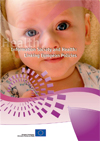 This brochure has been produced by Information Society Policy Link (ISPL), an initiative
of DG Information Society and Media that aims to link information society projects with European policy-makers across a wide range of policy domains.
This brochure has been produced by Information Society Policy Link (ISPL), an initiative
of DG Information Society and Media that aims to link information society projects with European policy-makers across a wide range of policy domains.
More than 3000 projects from information society programmes are being analysed, identifying a wealth of concrete results that support EU policies across all of the principal policy areas. By exchanging information and experiences, the Information Society Policy Link initiative helps to leverage the benefits of these activities for European policies.