Observatory for Digital Health Technologies in Europe - Final Report
- Details
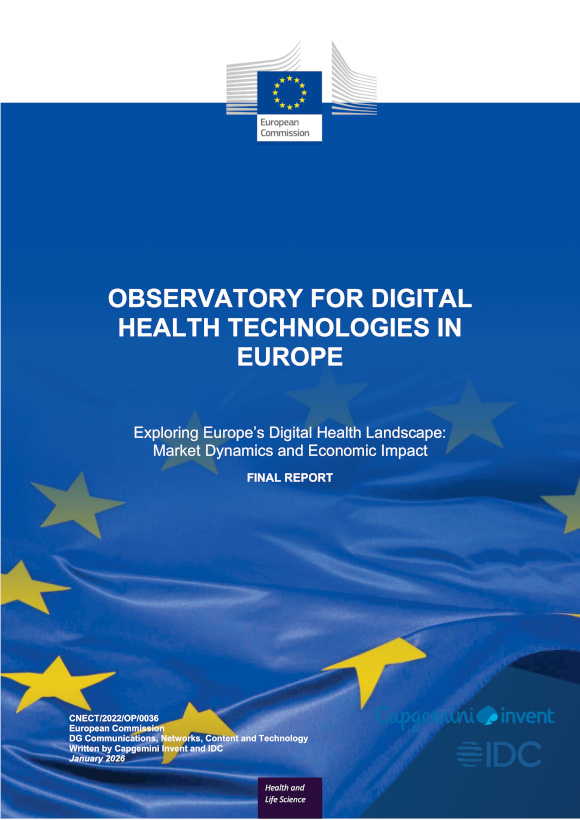 This report offers a comprehensive analysis of the EU27 digital health landscape, combining market intelligence, stakeholder insights and economic modelling to inform future policy and investment.
The first part of the report provides a detailed overview of the EU digital health technology market. It identifies the key drivers, barriers, and structural characteristics of the European digital health ecosystem, including vendor distribution, market fragmentation, maturity levels of different technology domains, and the roles of providers, regulators, and investors. The analysis highlights strong growth perspectives for the EU digital health market, where Artificial Intelligence stands out as a key technology.
eHealth Network Guideline on Hospital Discharge Report
- Details
 The Member States in the eHealth Network have adopted these supplementary clauses to the general guidelines for the electronic exchange of health data under Cross-Border Directive 2011/24/EU to support the exchange of Hospital Discharge Report for continuity of care in a cross-border setting. The Hospital Discharge Guideline builds on the foundations laid out by the Patient Summary and the ePrescription Guidelines (including datasets and code systems). The eHealth Network guidelines build a set of guidelines that should be seen as complementing each other in different use cases and are operating under the umbrella of the General Guidelines.
 Strategic Research and Innovation Roadmap of Trustworthy AI
- Details
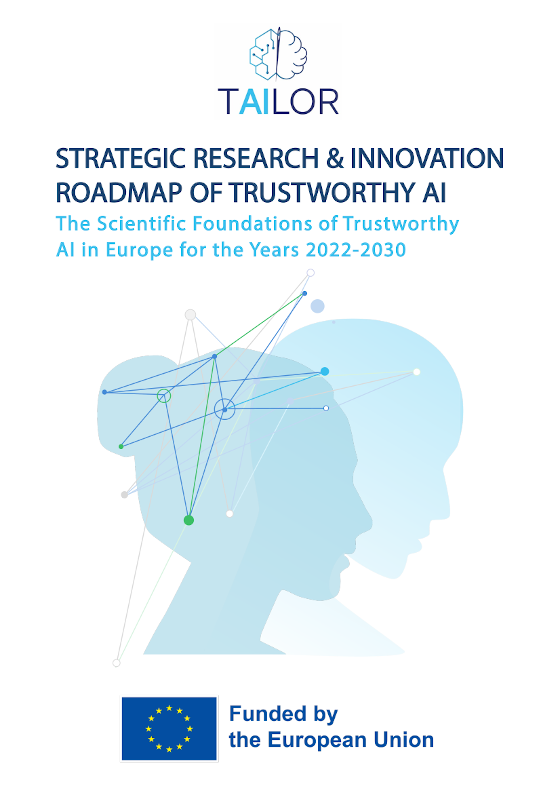 This document is the first version of the Strategic Research and Innovation Roadmap of the TAILOR project, focussed on Trustworthy Artificial Intelligence (AI) through Learning, Optimization and Reasoning. The project objectives are extremely ambitious, and address topics that are currently very actively investigated. Therefore, defining a roadmap is itself an ambitious goal. We have started analysing many documents containing Roadmaps and Research and Innovation agendas of AI related initiatives (in particular we have analysed the AI4EU Strategic Research and Innovation Agenda and the AI, Data and Robotics PPP Strategic Research Innovation and Deployment Agenda and the AI Watch Index 2021).
 Blockchain Applications in the Healthcare Sector
- Details
 The healthcare industry faces challenges due to constantly changing conditions, including demographic transitions and the advancements we have achieved until now in health science and the healthcare industry. Life expectancy has increased, and we live longer with chronic diseases (Anderson & Hussey, 2000; Bongaart et al., 2015). This requires the healthcare industry to focus on an increasingly older population with a more complex disease burden than healthcare previously dealt with. As a direct consequence of the demographic shift, non-communicable and chronic diseases are becoming more prevalent, straining all health systems (Harris, 2019).
 The Programme for the Union's Action in the Field of Health 'EU4Health Programme'
- Details
 On 24 March 2021, Regulation (EU) 2021/522 of the European Parliament and of the Council1 was adopted as part of the Multiannual Financial Framework for the 2021-2027 period. That Regulation established a Programme for the Union's action in the field of health
('the EU4Health Programme').
On 24 March 2021, Regulation (EU) 2021/522 of the European Parliament and of the Council1 was adopted as part of the Multiannual Financial Framework for the 2021-2027 period. That Regulation established a Programme for the Union's action in the field of health
('the EU4Health Programme').
The COVID-19 pandemic has caused an unprecedented health crisis in the Union and beyond, with severe socio-economic consequences and human suffering. The EU4Health Programme represents an unparalleled Union level financial commitment for health actions in comparison with previous health programmes.
Artificial Intelligence in Healthcare Report
- Details
 This study presents an overview of the development, adoption and use of Artificial Intelligence (AI) technologies and applications in the healthcare sector across all Member States. The main aim of this study was to support the European Commission in identifying and addressing any issues that might be hindering the wider adoption of AI technologies in the healthcare sector. The study will help the Commission to take action to achieve its long-term goal on the effective implementation of AI in the healthcare sector, based around common legislation and policy framework.
 Ethics and Governance of Artificial Intelligence for Health: WHO Guidance
- Details
 Artificial Intelligence (AI) refers to the ability of algorithms encoded in technology to learn from data so that they can perform automated tasks without every step in the process having to be programmed explicitly by a human. WHO recognizes that AI holds great promise for the practice of public health and medicine. WHO also recognizes that, to fully reap the benefits of AI, ethical challenges for health care systems, practitioners and beneficiaries of medical and public health services must be addressed. Many of the ethical concerns described in this report predate the advent of AI, although AI itself presents a number of novel concerns.
 More Digital Health News ...
- EU4Health Programme: Regulation (EU) 2021/522 of the European Parliament and of the Council
- Proposal for a Regulation Laying Down Harmonised Rules on Artificial Intelligence
- Artificial Intelligence in MedTech: Delivering on the Promise of Better Healthcare in Europe
- State of Health in the EU: Companion Report 2019
- What the Radiologist should Know about Artificial Intelligence - An ESR White Paper
- WHO Guideline: Recommendations on Digital Interventions for Health System Strengthening
- Final Report: Provision of a Market Study on Telemedicine