| Stay updated on the top DIGITAL HEALTH NEWS |
|---|
|
|
FDB Response to Public Health England Prescribed Medicines Review - Technology Role
- Details
- Category: First Databank
 Commenting on findings and recommendations from Public Health England's review into dependence and withdrawal associated with some prescribed medicines, Darren Nichols, UK managing director, FDB (First Databank), said:
Machine Learning Improves the Diagnosis of Patients with Head and Neck Cancers
- Details
- Category: Research
Abbott Announces New Data that Shows Artificial Intelligence Technology can Help Doctors Better Determine which Patients are Having a Heart Attack
- Details
- Category: Industry
 Abbott (NYSE: ABT) announced that new research, published in the journal Circulation, found its algorithm could help doctors in hospital emergency rooms more accurately determine if someone is having a heart attack or not, so that they can receive faster treatments or be safely discharged.
MEDICA Becomes Number One Trade Fair for Health Start-Ups too
- Details
- Category: Events
 18 - 21 November 2019, Düsseldorf, Germany.
Healthcare is going digital worldwide at an incredibly rapid pace. More and more applications for prevention, diagnostics and therapy are being made into apps (with matching hardware) for smartphones and tablets or are even available as wearables for direct use on the body.
Being Open about Open Source
- Details
- Category: Opinion
 Opinion Article by Shane Tickell, Chief Executive, IMS MAXIMS
IMS MAXIMS entered whole heartedly into the open source arena by releasing our code in 2014; but since then market conditions have changed. Despite this, we have not abandoned the project. In fact, we remain fully committed to it and optimistic that the new team at NHSX will recognise its value. Let me explain.
Medical Informatics Europe Conference 2019 (MIE 2019)
- Details
- Category: Events
The European Federation of Medical Informatics (EFMI) presents the 30th Medical Informatics Europe conference (MIE) at the Geneva International Conference Center (CICG). This conference is organized in partnership with the World Health Organization (WHO), the International Telecommunication Union (ITU), the State of Geneva (Geneva), the University of Geneva (UNIGE) and the University Hospitals of Geneva (HUG).
The Future of Mind Control
- Details
- Category: Research
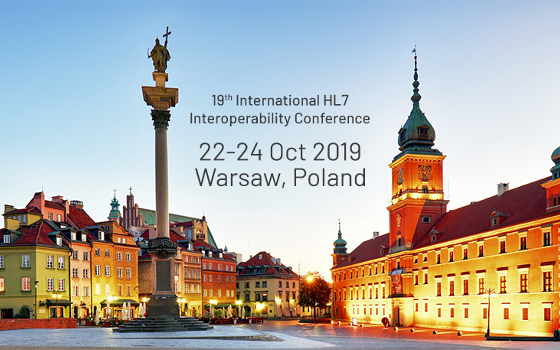
International HL7 Interoperability Conference 2019
- Details
- Category: Events
19th International HL7® Interoperability Conference (IHIC) will be held in Warsaw, Poland. The event, organized by HL7 Poland, will focus on implementation of healthcare interoperability standards, with special interest in project specifications like implementation guides and profiles, in conformance validation and testing.
St Helens and Knowsley Advance with Ambitious Digital Transformation Programme
- Details
- Category: System C
 St Helens and Knowsley Teaching Hospitals NHS Trusthas successfully gone live with System C’s CareFlow Vitals as part of its ambitious strategy to accelerate digitisation and become a digital exemplar using System C’s hospital and care community-wide blueprint.
UKCloud Health selected by NHS Shared Business Services to Provide Multi-Cloud Services on its New Cloud Solutions Framework
- Details
- Category: Industry
 UKCloud Health, the multi-cloud experts dedicated to powering the Healthcare community, has today announced that it has been awarded a place on all 4 lots of the new NHS Shared Business Services Cloud Solutions framework which runs for initial 2-year term with the option to extend to 2023.