PARMESAN: An AI-Based Predictive Tool to Find New Treatments for Genetic Disorders
- Details
- Category: Research
To discover new treatments for genetic disorders, scientists need a thorough knowledge of prior literature to determine the best gene/protein targets and the most promising drugs to test. However, biomedical literature is growing at an explosive rate and often contains conflicting information, making it increasingly time-consuming for researchers to conduct a complete and thorough review.
New Robot could Help Diagnose Breast Cancer Early
- Details
- Category: Research
A device has been created that could carry out Clinical Breast Examinations (CBE).
The manipulator, designed by a team at the University of Bristol and based at the Bristol Robotics Laboratory, is able to apply very specific forces over a range similar to forces used by human examiners and can detect lumps using sensor technology at larger depths than before.
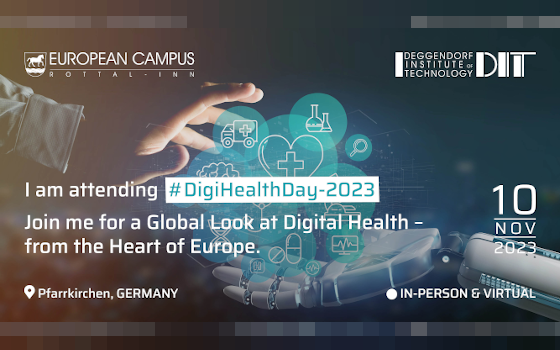
Open Call: DigiHealthDay-2023 @ DIT-ECRI
- Details
- Category: Research
The Premier Digital Health Event of 2023 is about to unfold. Mark your calendars for November 9th and 10th as the fourth edition of the DigiHealthDay unveils. This prominent event is hosted by the Deggendorf Institute of Technology - European Campus Rottal-Inn (DIT-ECRI) in collaboration with their dedicated PARTNERS and SPONSORS.
Radiologists Outperformed AI in Identifying Lung Diseases on Chest X-Ray
- Details
- Category: Research
In a study of more than 2,000 chest X-rays, radiologists outperformed AI in accurately identifying the presence and absence of three common lung diseases, according to a study published in Radiology, a journal of the Radiological Society of North America (RSNA).
AI and Machine Learning can Successfully Diagnose Polycystic Ovary Syndrome
- Details
- Category: Research
Artificial intelligence (AI) and machine learning (ML) can effectively detect and diagnose Polycystic Ovary Syndrome (PCOS), which is the most common hormone disorder among women, typically between ages 15 and 45, according to a new study by the National Institutes of Health. Researchers systematically reviewed published scientific studies that used AI/ML to analyze data to diagnose and classify PCOS and found that AI/ML based programs were able to successfully detect PCOS.
AI may Outperform Most Humans at Creative Thinking Task
- Details
- Category: Research
Large language model (LLM) artificial intelligence (AI) chatbots may be able to outperform the average human at a creative thinking task where the participant devises alternative uses for everyday objects (an example of divergent thinking), suggests a study published in Scientific Reports. However, the human participants with the highest scores still outperformed the best chatbot responses.
ChatGPT Performs as Well as Doctors for Suggesting the Most Likely Diagnoses in the Emergency Medicine Department
- Details
- Category: Research
The artificial intelligence chatbot ChatGPT performed as well as a trained doctor in suggesting likely diagnoses for patients being assessed in emergency medicine departments, in a pilot study to be presented at the European Emergency Medicine Congress.
Researchers say a lot more work is needed, but their findings suggest the technology could one day support doctors working in emergency medicine, potentially leading to shorter waiting times for patients.
More Digital Health News ...
- Smartphone Technology Expected to Advance Assessment of Neurological Soft Signs in Schizophrenia
- More Cases of Breast Cancer Detected with the Help of AI
- Online AI-Based Test for Parkinson's Disease Severity Shows Promising Results
- AI Performs Comparably to Human Readers of Mammograms
- ChatGPT is Debunking Myths on Social Media Around Vaccine Safety
- ChatGPT Shows 'Impressive' Accuracy in Clinical Decision Making
- AI Predictions for Colorectal Cancer: One Step Closer to Efficient Precision Oncology
Page 66 of 264