University of Tokyo's RCAST, Fujitsu, and Kowa Successfully Create Promising New Compounds to Fight Drug-Resistant Cancer
- Details
- Category: Industry
 The University of Tokyo's Research Center for Advanced Science and Technology (RCAST), Fujitsu Limited, and Kowa Company Ltd. today announced that using IT-based drug discovery technologies, which entails computer-based virtual design and evaluation, they have successfully created new small molecule compounds that can inhibit cancer-causing "target proteins," and that demonstrate promise against cancers that have shown resistance to existing drugs.
 Lexmark Partners with NHS Shared Business Services in Managed Print Services
- Details
- Category: Industry
 Lexmark, a global imaging solutions leader, today announced a partnership with NHS Shared Business Services (NHS SBS) to enable the public sector to utilise Lexmark technology to support their aim of meeting paperless and digital targets, whilst delivering savings, efficiencies and improving patient care. The framework allows Lexmark to integrate hardware and software platforms to drive interoperability and 'paperlight' working environments within the Public Sector.
 First Call for Science and Technology at ESC Congress 2018
- Details
- Category: Industry
 Participate in the first ever ESC Digital Health Call for Technology, for the chance to present your innovations, your technology or your products at ESC Congress 2018 in front of an audience of relevant professionals. A dedicated Digital Health Area will feature a stage setting surrounded by Industry booths and meeting facilities, providing opportunities to exchange on latest digital health related innovations and research.
 FDA Takes New Steps to Advance Digital Health, Opening Docket to Solicit Feedback on Software Products
- Details
- Category: Industry
 Today, the FDA is opening a docket to solicit feedback on important provisions of the 21st Century Cures Act ("Cures Act"). The Cures Act amended the Federal Food, Drug, and Cosmetic Act to exclude certain medical software functions from the definition of a medical device. Under the Cures Act, Congress excluded specific types of software from FDA regulation, including general wellness software products, electronic patient records and more.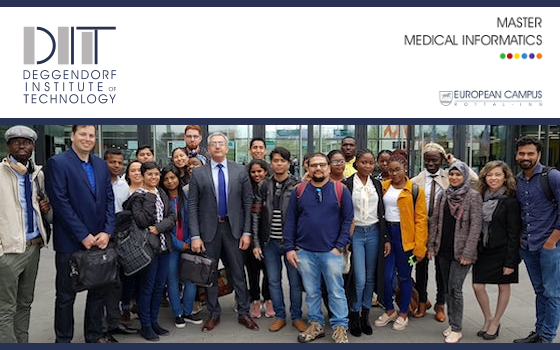
International Master's in Medical Informatics at the Heart of Europe
- Details
- Category: Industry
The Master of Science Program in Medical Informatics (MMI) at European Campus Rottal-Inn (ECRI) in Pfarrkirchen - a branch of the Deggendorf University of Applied Sciences (THD - Technische Hochschule Deggendorf) in Bavaria, Germany - is accepting applications for entry in October 2018.

Applications for the G4A Global Accelerator Are Now Open
- Details
- Category: Industry
Founded in 2013 in Berlin initially giving out grants to innovative healthcare apps, G4A Accelerator is now a global program dedicated to helping innovative health & care startups grow and enable positive disruption and progress within the digital health & care universe.
Novartis Launches FocalView App, Providing Opportunity for Patients to Participate in Ophthalmology Clinical Trials from Home
- Details
- Category: Industry
 Novartis announced the launch of its FocalView app, an ophthalmic digital research platform created with ResearchKit. FocalView aims to allow researchers to track disease progression by collecting real-time, self-reported data directly from consenting patients. By adapting the design of clinical trials to suit the daily routine of patients, the app may reduce barriers to participation, leading to a more nuanced understanding of ophthalmic diseases and potentially accelerating the development of novel treatments.
 More Digital Health News ...
- FDA Permits Marketing of Artificial Intelligence-Based Device to Detect Certain Diabetes-Related Eye Problems
- Pitch for Smarter Healthcare at the Roche Innovation Summit
- Merck Partners with Medisafe to Help Improve Medication Adherence for Cardiometabolic Patients
- NHS Staff Punished as 500,000 Rely on WhatsApp, Facebook Messenger and other Apps
- Iris.ai Closer to Creating the World's First AI Science Assistant
- Blackpool Teaching Hospitals Triggers Digital Transformation with MAXIMS go-live
- Nominations Open for 2nd HIMSS-Elsevier Digital Healthcare Award in Europe
Page 62 of 226